

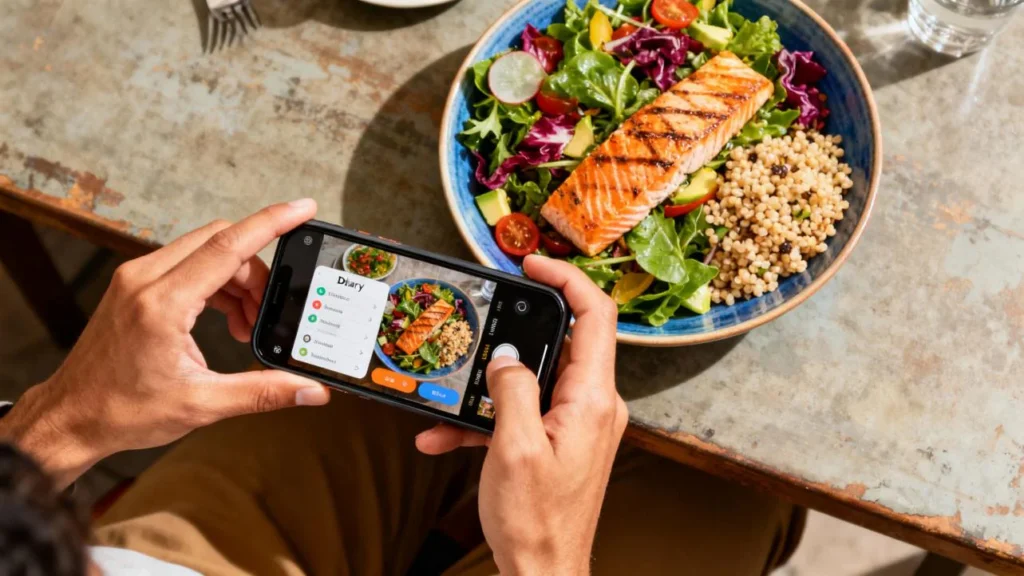
For many, fast food is a fact of life. It’s quick, affordable, and predictable. The conflict arises when convenience clashes with health objectives. Traditional nutrition advice often frames fast food as a categorical failure, a habit to be eliminated. This all-or-nothing mindset is not only unrealistic but also counterproductive. It leads to cycles of restriction and overindulgence, making it harder to take control of your nutrition goals.
The solution isn’t avoidance; it’s informed decision-making. You can incorporate fast food into a balanced diet by understanding exactly what you’re consuming. This requires moving beyond guesswork and generic calorie estimates. Modern tools and a structured workflow now make this level of precision accessible to anyone with a smartphone.
This guide outlines a practical, modern workflow centered on using a fast food meal analyzer. We’ll explore how to gather accurate data, interpret the results in the context of your personal targets, and build sustainable habits that don’t rely on willpower alone. This is not about finding loopholes, but about gaining clarity and empowerment over your daily choices.
Why Guessing Your Fast Food Nutrition Doesn’t Work
You might glance at a menu’s calorie count and think you have the information you need. However, calories are only one part of the story. The nutritional profile of a meal—its balance of protein, carbohydrates, fats, fiber, sodium, and added sugars—is what truly impacts your energy, satiety, and long-term health.
Relying on memory or rough estimates is flawed. A “grilled chicken sandwich” can vary wildly in calories and macros depending on the sauce, cheese, and portion size. A “side salad” can become a calorie-dense meal with the wrong dressing. Without precise data, you’re navigating in the dark, which makes consistent progress toward specific goals like muscle building, fat loss, or managing a health condition nearly impossible.
Furthermore, the psychological effect of guessing is detrimental. Uncertainty breeds anxiety around food and can lead to a “what the hell” effect, where one perceived misstep leads to abandoning your plan entirely. Concrete data replaces this anxiety with control.
Core Components of a Modern Analysis Workflow
A functional workflow requires more than just an app. It’s a system that connects information gathering with actionable insights. The core components are a reliable data source, a method for logging and tracking, and a framework for applying the insights to your real-life decisions.
The Analyzer: Your Source of Truth
At the heart of this system is the analyzer itself. The most effective tools go beyond static nutrition databases. They should provide detailed breakdowns for customizable orders—holding the mayo, adding extra protein, choosing a different bun. This specificity is crucial because your real-world order is almost never the default menu item. A robust fast food meal analyzer acts as your nutritional compass, offering clarity on the impact of every modification.
Integration with Your Tracking Ecosystem
For the data to be useful, it must fit seamlessly into your existing routine. The best workflows allow you to export or instantly log the analyzed meal into your preferred macro or calorie tracking app. This eliminates double entry and ensures all your nutritional data—home-cooked meals and fast food alike—lives in one place, giving you a complete picture of your daily intake.
From Data to Decision: The Planning Layer
The final component is a planning habit. This involves using the analyzer before you order, not after. Check the nutritional impact of different combinations during a calm moment. Decide on your order in advance based on how it fits your remaining daily targets. This pre-commitment strategy bypasses impulsive choices driven by hunger or menu marketing.
Implementing Your Personal Nutrition Strategy
With the workflow components in place, the next step is to apply them to your unique goals. The data is meaningless without context. Your strategy will differ significantly if you’re aiming for weight loss, athletic performance, or managing sodium intake.
For fat loss, focus on the protein-to-calorie ratio and overall energy deficit. Use the analyzer to identify items that are high in protein and fiber but lower in total calories, ensuring you stay full and satisfied. For muscle gain, you might prioritize total calories and protein content, using the tool to find calorie-dense options that help you meet your surplus. If managing blood pressure is a concern, the analyzer becomes indispensable for uncovering hidden sodium, which can be astonishingly high even in seemingly healthy items like salads or grilled chicken.
The key is to set 2-3 priority metrics based on your goal. Don’t try to optimize everything at once. Let the analyzer show you the options that best align with your priorities, making “good choices” a data-driven conclusion, not a vague hope.
Advanced Tactics: Customization and Long-Term Habit Building
Once you’re comfortable with the basics, you can leverage the workflow for more sophisticated nutrition management. Most fast food meals are high in refined carbs and fats but low in vegetables and lean protein. Use the detailed breakdown to guide your customizations. You might discover that removing a sauce saves 150 calories and 15 grams of fat, allowing you to add an extra protein patty or a side of apple slices without exceeding your targets.
For long-term adherence, build a “go-to menu.” Use your analyzer to curate 3-5 approved meals from your most frequented restaurants that reliably fit your macros. This reduces decision fatigue and makes healthy ordering automatic. Periodically review and update this list as your goals or menus change.
The most advanced applications involve pattern recognition over weeks or months. By consistently logging your analyzed fast food choices, you can review your history. You might notice that your energy dips on days you eat a certain item, or that you consistently exceed your sugar goal at a particular chain. This turns the workflow from a transactional tool into a system for continuous learning and adjustment.
Some of the most precise tools now leverage artificial intelligence to provide these deeper insights. An AI meal nutrition analyzer can predict how a meal will affect your fullness, suggest optimal modifications based on your past preferences, and even forecast your weekly nutritional intake based on your ordering patterns, moving from simple tracking to proactive guidance.
Common Pitfalls and How to Avoid Them
Even with the best tools, there are mistakes that can derail your progress. One major pitfall is becoming overly restrictive. The goal is inclusion and balance, not perfection. If your analyzed meal uses most of your day’s fat allowance, you can simply adjust your other meals to be leaner. The data gives you the flexibility to adapt.
Another mistake is ignoring micronutrients and sodium. While macros are primary for body composition goals, long-term health requires attention to vitamins, minerals, and sodium intake. Use the analyzer’s full report periodically to check these areas. You may find you need to supplement a fast-food day with extra fruits, vegetables, or potassium-rich foods at home.
Finally, avoid letting the tool promote an unhealthy obsession with numbers. The workflow is a means to an end—better health and freedom—not the end itself. If checking the analyzer causes stress, take a step back. The data should serve you, not the other way around.
Frequently Asked Questions
Can I really meet fitness goals while eating fast food?
Yes, absolutely. Fitness goals are primarily governed by total calorie intake and macronutrient distribution over time. A fast food meal analyzer provides the precise data needed to fit individual meals into your daily or weekly targets. Many successful athletes and physique competitors strategically use fast food to meet high-calorie or high-protein needs conveniently.
How accurate are these analyzer tools?
The best tools source their data directly from restaurant nutritional disclosures, making them highly accurate for standard menu items. Accuracy for custom orders is based on algorithmic calculations of added or removed components, which are generally reliable. They are far more accurate than personal estimation or generic calorie-counting apps.
Isn’t it time-consuming to analyze every meal?
The initial learning phase requires the most time. As you build your personal “go-to menu” of analyzed meals that fit your goals, the process becomes instantaneous. Spending two minutes planning an order can save you from the physical and psychological cost of an unplanned, poor nutritional choice, representing a significant net time and energy savings.
What if my favorite restaurant isn’t in the database?
Many analyzer platforms have extensive databases covering major chains. For smaller local restaurants, you can use the tool’s functionality to build a comparable meal from similar items. Alternatively, you can practice the estimation skills you’ve developed by analyzing known items and apply that knowledge to make your best educated choice.
Can this help with medical conditions like diabetes or hypertension?
It can be a powerful supportive tool. For diabetes, tracking carbohydrate counts is essential, and an analyzer gives exact numbers. For hypertension, monitoring sodium is critical. By providing exact figures, these tools empower you to make choices that align with medical guidelines. Always consult with your doctor or dietitian to integrate this data into your formal management plan.
Do I still need to track home-cooked meals?
For a complete picture of your nutrition, yes. The fast food analyzer is one part of a comprehensive tracking strategy. Your overall dietary pattern determines your results. Many people find that the clarity gained from analyzing fast food makes them more mindful and accurate when logging home-cooked meals as well.
Conclusion
Taking control of your nutrition goals in a world of convenience food is no longer a paradox. By adopting a modern workflow built around a precise fast food meal analyzer, you replace uncertainty with data, and guilt with strategy. This approach acknowledges the reality of modern life while providing the tools to navigate it successfully. You move from being a passive consumer to an active decision-maker.
The ultimate goal is not to create a lifelong dependency on an app, but to build nutritional literacy and intuitive habits. The consistent use of this workflow trains your eye for portion sizes, your understanding of macronutrient balance, and your ability to plan ahead. Over time, the need for constant checking may diminish, but the confidence and control you gain will remain. You can finally have your convenience and your health goals, without compromise.