
Morocco is a country of staggering contrasts, where ancient medinas hum with life just miles from silent desert dunes, and snow-capped mountains overlook sun-baked coastlines. This diversity is its greatest asset for travelers, but it also presents a classic planning challenge: with so many compelling regions, how do you choose where to go? A successful trip hinges on selecting destinations that align with your interests and weaving them into a logical, immersive journey.
Rather than trying to see everything, the most rewarding approach is to discover a curated selection of places that offer a profound sense of place. This guide moves beyond simple lists to explore the essential character of Morocco’s key regions, providing the context you need to build a coherent and unforgettable travel plan. Whether you seek the frenetic energy of historic cities, the profound tranquility of the Sahara, or the laid-back charm of the coast, understanding what each area offers is the first step.
Crafting Your Core Route: Imperial Cities & The Atlas
Most itineraries naturally begin in the imperial cities, home to Morocco’s most concentrated history, culture, and architectural splendor. These urban centers are connected by good roads and rail links, making them the logical backbone of a first-time visit.
Marrakech: The Sensory Heart
No introduction to Morocco is complete without Marrakech. The city is an experience in itself. Djemaa el-Fna square transforms from a bustling market by day into a vast open-air theatre of storytellers, musicians, and food stalls by night. Getting lost in the labyrinthine souks of the medina is part of the fun, but balance the intensity with respites in the serene Majorelle Garden or the quiet courtyards of a traditional riad. Marrakech also serves as the primary gateway for excursions into the High Atlas Mountains.
Fes: The Medieval Mind
If Marrakech is the heart, Fes is the brain. Home to the world’s oldest continuously operating university, Al Quaraouiyine, Fes el-Bali (the old city) is a UNESCO-listed medieval maze. It’s less performative and more authentic in its daily rhythms than Marrakech. The highlight is the Chouara Tannery, where the age-old process of dyeing leather unfolds in a vivid, if pungent, spectacle. A visit here demands a knowledgeable guide to truly appreciate its historical and artisanal depth.
The High Atlas Mountains
A short drive south from Marrakech, the drama of the landscape shifts radically. The High Atlas offers trekking, Berber village visits, and breathtaking vistas. The journey over the Tizi n’Tichka pass is spectacular, leading towards the desert. For a tangible goal, consider a stay in the Aït Benhaddou kasbah, a stunning earthen fortress that has starred in countless films.
The Allure of the Sahara Desert
No symbol of Morocco is more iconic than the Sahara. A visit here is less about a specific town and more about the experience of the dunes themselves, primarily the Erg Chebbi near Merzouga or Erg Chigaga near M’Hamid.
Reaching the desert requires a significant journey—often a full day’s drive from Marrakech or Fes—which makes it a commitment. The reward is unparalleled: silence so deep it rings, nights where the Milky Way is vividly clear, and the surreal beauty of dawn light on golden sand. The experience typically involves a 4×4 transfer to a desert camp, a camel trek at sunset, and a night in a luxury or traditional Berber tent. This is a cornerstone experience for many, and integrating it smoothly is key to a successful Morocco itinerary.
Coastal Escapes & Northern Charms
For a complete contrast to the desert and cities, Morocco’s Atlantic and Mediterranean coasts provide a refreshing counterpoint.
Essaouira: The Windy City
Essaouira’s fortified medina, with its white-and-blue washed walls, feels immediately different. Its breezy, laid-back atmosphere is a welcome relief. Known for windsurfing, fresh seafood grilled right on the harbor, and a thriving arts scene, it’s an easy 2.5-hour drive from Marrakech and fits perfectly as a 2-3 night coastal retreat.
Chefchaouen: The Blue Pearl
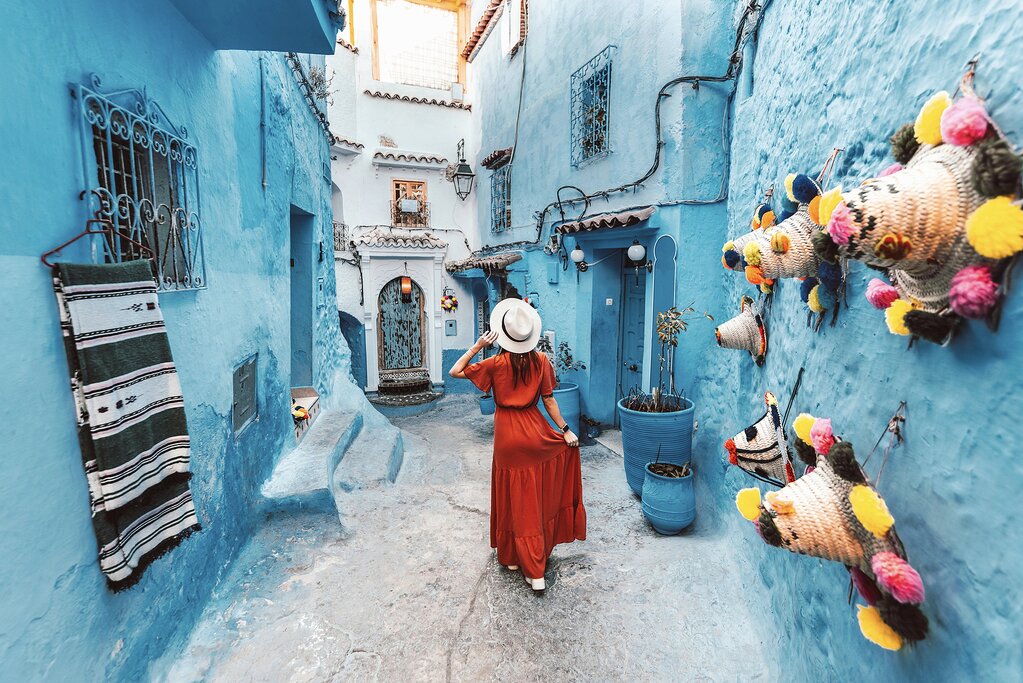
Nestled in the Rif Mountains, Chefchaouen is famous for its striking blue-washed buildings. Its small size and relaxed pace make it ideal for wandering without a map, photographing its azure lanes, and enjoying the mountain air. It pairs well with a trip to Fes or Tangier and offers a distinctly different aesthetic from the southern destinations.
Beyond the Beaten Path: For the Return Visitor
Once you’ve experienced the classic circuit, consider these regions for a deeper dive.
The Draa Valley & Southern Oases
South of the Atlas, the road to the desert follows the Draa Valley, a string of palm oases and ancient kasbahs like Tamnougalt. This area feels far removed from the tourist trail and offers a genuine glimpse into oasis life and pre-Saharan landscapes.
The Rugged Anti-Atlas
For adventurous travelers, the Anti-Atlas region presents stark, volcanic landscapes and remote Berber communities. The Ameln Valley and the stunning natural rock arch of Legzira Beach (though one arch has collapsed) appeal to those seeking raw, untamed geology and cultural encounters with few other tourists.
Practical Planning for Your Discoveries
Knowing where to go is half the battle; understanding how to travel between them is the other. Domestic flights connect Casablanca, Marrakech, and Fes, but overland travel reveals the country.
Train travel is efficient and comfortable for the Casablanca-Rabat-Fes-Tangier axis. For longer, more scenic, or off-route journeys, renting a car offers maximum flexibility, though driving in major cities can be stressful. Many travelers opt for the balanced solution of hiring a private driver or joining a small group tour for longer segments, like the journey to the Sahara, allowing them to relax and enjoy the views.
When selecting the best places to visit in Morocco, always consider travel time. Morocco is larger than it appears on a map, and mountain and desert roads demand a slower pace. Cluster destinations geographically to minimize backtracking and long transit days.
Frequently Asked Questions
How many days do I need for a good Morocco itinerary?
A 7-10 day trip allows you to cover a core circuit comfortably, such as Marrakech, the Sahara, and Fes. With two weeks, you can add coastal regions like Essaouira or the north (Chefchaouen) at a more relaxed pace without feeling rushed.
Is it safe to travel independently in Morocco?
Yes, Morocco is generally very safe for tourists. Petty crime like pickpocketing can occur in crowded medinas, so standard vigilance is advised. Solo travelers, including women, should expect frequent attention and bargaining in markets but rarely face serious threats. Dressing modestly helps minimize unwanted attention.
What is the best time of year to visit?
Spring (March-May) and autumn (September-November) offer the most universally pleasant weather, with warm days and cool nights, ideal for both city exploration and desert travel. Summers can be extremely hot, especially inland and in the desert, while winters bring cold nights to the mountains and desert.
Should I book a tour or plan independently?
This depends on your style. Independent planning offers total flexibility and can be cost-effective for cities. For complex routes involving the Sahara, the Atlas Mountains, or multiple regions, a well-organized tour or private driver can handle logistics, provide expert local guides, and save significant time and stress.
How should I dress while visiting?
Modest, loose-fitting clothing is respectful and practical. For women, covering shoulders and knees is recommended, especially in rural areas and medinas. Men should avoid short shorts. A lightweight scarf is versatile for sun protection, modesty, or desert sand. Sturdy, comfortable walking shoes are non-negotiable for uneven medina streets.
Conclusion
Discovering the best places to visit in Morocco is about creating a journey that reflects your personal travel rhythm. It’s the interplay between the vibrant chaos of Marrakech, the timeless silence of the Sahara, and the breezy calm of the coast that defines the Moroccan experience. A successful itinerary isn’t a checklist but a balanced blend of these contrasting elements, connected by thoughtful travel days that themselves become part of the adventure.
By focusing on a coherent geographical flow and allowing enough time in each location to move beyond the surface, your next trip can offer more than just sights—it can provide a genuine connection to this multifaceted kingdom. The true discovery lies not only in the places themselves but in the moments between them, on winding mountain roads and in quiet roadside cafes, where the enduring spirit of Morocco reveals itself most clearly.