

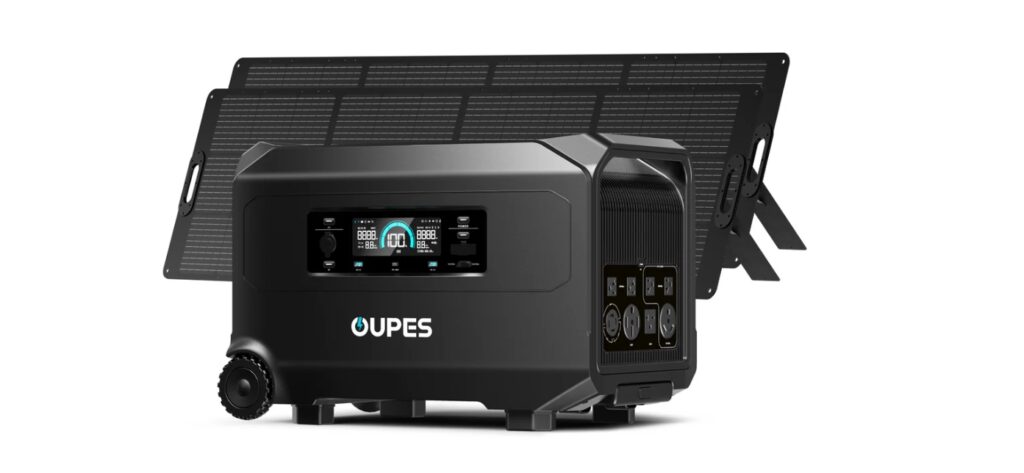
The question of whether a portable power station can keep a refrigerator running is no longer theoretical. For homeowners facing power outages, campers seeking off-grid comfort, or anyone needing reliable backup power, the answer has significant practical implications. Refrigerators are not simple loads; they cycle on and off, demanding high startup surges followed by periods of low consumption. This makes powering them a true test of a power station’s capability.
Modern portable power stations have evolved far beyond small battery packs for charging phones. With advancements in lithium battery technology and pure sine wave inverters, today’s units offer capacities once reserved for bulky, gas-guzzling generators. But “can it run a fridge?” depends entirely on matching the specific electrical demands of your appliance with the correct specifications of the power station. This analysis breaks down the critical factors—surge power, running watts, and battery capacity—to provide a clear, realistic assessment.
Understanding Your Refrigerator’s Power Demands
Before connecting any appliance, you must know its power requirements. These are typically found on a label inside the fridge or freezer compartment or in the user manual. Two figures are essential: running watts and starting watts.
Running watts (or rated power) is the continuous power the refrigerator’s compressor needs to operate once it’s running. For a modern, energy-efficient full-sized refrigerator (18-22 cubic feet), this typically ranges from 100 to 200 watts. Older or larger models may consume 300-400 watts or more.
Starting watts (or surge power) is the critical, brief spike in power required to start the compressor motor. This surge can be 2 to 3 times the running wattage, and sometimes higher. A fridge drawing 150 running watts may require a 450-watt surge to start. If your portable power stations cannot deliver this instantaneous surge, the compressor will fail to start, and the appliance won’t run, even if the unit’s rated capacity seems sufficient.
The Critical Role of the Inverter
The inverter within the power station converts stored DC battery power to the AC power your fridge needs. A pure sine wave inverter is non-negotiable for sensitive electronics like refrigerator compressor motors. Modified sine wave inverters can cause motors to run hot, fail prematurely, or not start at all. All quality modern power stations for this application feature pure sine wave technology. Additionally, the inverter’s continuous output rating must exceed the fridge’s running watts, and its peak or surge rating must comfortably handle the starting watt demand.
Key Power Station Specifications for the Job
To realistically run a full-sized refrigerator, you must scrutinize three core specs on any power station: inverter output, battery capacity, and input charging.
Inverter Output (Watts): This is your primary filter. Look for a unit with a continuous power rating (e.g., 1000W, 2000W) that is at least 20-30% higher than your refrigerator’s running watts. More importantly, verify its surge or peak power rating. A unit rated for 1000W continuous should have a surge capability of 2000W or more for several seconds. This headroom is what allows it to handle the compressor’s startup jolt reliably.
Battery Capacity (Watt-hours): This determines how long the fridge will run. Capacity is measured in watt-hours (Wh) or kilowatt-hours (kWh). A 1000Wh battery can theoretically deliver 1000 watts for one hour, or 100 watts for 10 hours. Since a fridge cycles on and off, calculating runtime isn’t linear.
Calculating Realistic Runtime
A refrigerator does not run constantly. Its compressor cycles on to cool the interior and then shuts off. The “duty cycle”—the percentage of time the compressor is active—varies based on ambient temperature, how often the door is opened, and the unit’s efficiency. A common estimate is a 30-50% duty cycle.
Here’s a simplified runtime calculation:
- Find your fridge’s average running watts (e.g., 150W).
- Estimate the daily duty cycle (e.g., 40%, or 9.6 hours per day).
- Calculate daily energy use: 150W * 9.6 hours = 1440 Watt-hours.
A power station with a 1500Wh (1.5kWh) battery would, in theory, run this fridge for about 24 hours. However, real-world factors reduce this: inverter efficiency (about 85-90%), battery discharge depth (it’s best not to drain lithium batteries below 10-20%), and colder ambient temperatures can reduce the compressor’s cycle time. A safe rule is to assume you’ll get 60-70% of the theoretical capacity. Therefore, a 1500Wh station might provide a reliable 16-20 hours of backup for a modern, efficient fridge.
Practical Considerations and Setup Tips
Success depends on more than just plugging it in. Proper setup extends runtime and protects your equipment.
Minimize Opening: Every time the door opens, warm air enters, forcing the compressor to work longer. Treat a power outage like an extended picnic: take out what you need for several hours at once.
Pre-Cool and Fill: A full refrigerator retains cold better than an empty one. If anticipating an outage, set the fridge to its coldest setting a few hours prior and fill empty space with water jugs.
Recharging Strategy: A 1500Wh power station takes time to recharge. A standard wall outlet might take 6-8 hours. Having a solar panel input can provide crucial recharge capability during extended grid outages, making the system truly sustainable. This is where integrated home backup power solutions that combine large-capacity stations with solar compatibility show their value over smaller, consumer-grade units.
Extension Cords: Use a heavy-duty, short extension cord if needed. Lightweight cords can cause voltage drop, making it harder for the compressor to start.
Choosing the Right Power Station
For a full-sized refrigerator, small power stations under 1000Wh are generally unsuitable for meaningful backup. They may start the fridge but will deplete in just a few hours. Focus on units in the 1500Wh to 3000Wh range. These offer the necessary surge capacity, sufficient runtime (often 1-2 days for a fridge), and feature the robust pure sine wave inverters required.
Look for models that offer multiple recharging methods (AC, solar, car) and have expandable capacity options. Some allow you to connect additional battery packs, effectively customizing your backup duration. This modular approach is becoming a standard for serious preparedness.
Frequently Asked Questions
How long can a 500-watt power station run a refrigerator?
A 500-watt station likely lacks the surge capacity to start a full-sized fridge. Even if it could, its battery capacity (typically 500Wh or less) would be depleted in just a few hours of compressor runtime. It’s suitable for mini-fridges or brief stabilization during a short outage, not for reliable, extended backup of a major appliance.
Do I need a special power station for a refrigerator?
You need a power station with a pure sine wave inverter and a high surge rating. Standard modified sine wave units or those with insufficient peak power (like many small “solar generators”) can damage the compressor or fail to start it. Always check for “pure sine wave” and a surge rating at least double the fridge’s running watts.
Can I run my refrigerator and other appliances at the same time?
Yes, but you must add the running watts of all appliances and, critically, consider their combined startup surges. The most demanding startup surge will dictate the required peak power of the station. Running a fridge (150W) and a modem (10W) is fine. Adding a coffee maker (1000W) would require a much larger unit with a 2000W+ inverter.
How do I connect my power station to the refrigerator?
Plug the refrigerator directly into the power station’s AC outlet. Ensure the station is powered on before plugging in the fridge. This allows the station to manage the initial surge properly. Avoid using power strips with surge protectors, as they can interfere with the power station’s operation.
Will using a power station save me money on electricity?
No. Portable power stations are batteries; they store energy, not generate it. You must pay for the electricity to charge them. Their primary value is in providing backup power during outages, enabling off-grid use, or supplying clean, quiet power where grid access is unavailable.
Can I keep my power station plugged in all the time?
Most modern units with Lithium Iron Phosphate (LiFePO4) batteries are designed for long-term storage and can be left plugged in, as their battery management systems (BMS) will stop charging at 100%. However, for optimal battery longevity, consult the manufacturer’s guidelines. Some suggest maintaining a charge between 20-80% for storage.
Conclusion
Modern portable power stations can absolutely run a full-sized refrigerator, but with clear and important caveats. The success of this application hinges on selecting a unit with adequate surge power to handle the compressor’s startup demand, sufficient battery capacity for your desired runtime, and the essential pure sine wave inverter technology. For a typical household, this means investing in a mid- to large-sized station, typically 1500Wh or larger, from a reputable brand focused on backup power.
Realistically, these devices have transitioned from novelty gadgets to serious components of home emergency planning. When sized correctly, they offer a silent, fume-free, and remarkably effective way to preserve food and provide peace of mind during grid failures. By carefully matching your appliance’s specifications with the power station’s capabilities, you can create a reliable backup system that keeps your refrigerator humming long after the lights go out.